SPECIAL DISCOUNTS ON OFFICIAL PRODUCTS


Sewer renewal and asset management in Mexico
Prioritize sewer renewal through inventory, diagnosis, criticality, and comparison of rehabilitation options for water utilities in Mexico.
CIVIL ENGINEERING
ASCE México
10/17/20264 min read
A street is opened to repair a pipe, and months later the same corridor is under construction again. For the people who live or work there, the technical explanation matters less than the repeated disruption. For the utility, the scene raises a planning question: did the project resolve an isolated defect, or address a need identified within the network as a whole?
Sewer renewal provides an opportunity to move the discussion from the length of pipe installed to the service that needs to be maintained. We propose starting with an understandable inventory, recognizing uncertainty, and comparing alternatives before selecting a technology. The decision should be explainable through information about the system, the site, and the people affected.
Pipe condition does not tell the whole story
EPA’s asset management guide connects asset condition, service level, criticality, lifecycle costs, and long-term funding (U.S. Environmental Protection Agency [EPA], 2008). That structure offers a reference for organizing decisions; it does not prescribe a universal annual replacement percentage for Mexican sewer networks.
For an initial exercise, consider two hypothetical pipe segments in similar physical condition. One crosses a road with alternative traffic routes; the other serves an essential facility and has no straightforward bypass option. This example illustrates why inspection should be accompanied by a description of failure consequences, rather than a physical condition score alone.
Build an inventory that acknowledges missing information
A working record can include a segment identifier, location, material, diameter, length, known depth, inspection date and type, observed defects, and intervention history. We suggest adding a confidence field. A documented installation date and an estimated date should not appear to carry the same evidential weight.
The first useful output could be a map of information gaps: segments requiring location confirmation, unrecorded connections, or inspections too old to support a decision. Instead of filling those gaps with invisible assumptions, the team can turn them into a survey program. Missing information also deserves a budget and an assigned owner.
For a Mexican reference, CONAGUA’s MAPAS library brings together manuals on water supply, sewerage, and sanitation, including a volume on collection network operation and maintenance (Comisión Nacional del Agua, 2019). Consult the relevant volume and compare it with the requirements of the utility and the specific project.
Diagnose the problem before selecting the intervention
An inspection should answer a decision question. If a localized problem is suspected, the survey should help establish its limits; if the issue involves network performance, the evaluation needs information suited to that purpose. We suggest ending each campaign with a record explaining which decision it supports and which uncertainties remain.
EPA’s trenchless rehabilitation fact sheet describes methods including cured-in-place pipe, sliplining, and pipe bursting. It also discusses limitations associated with geometry, installation, and surrounding conditions (EPA, 1999). This is a reference for principles; its historical costs and examples should not be transferred into present-day quotations.
Three questions for comparing proposals
We propose asking each alternative to explain which defect it addresses, which service capacity it provides, and how acceptance will be verified. The comparison should also identify what the solution does not cover. A segment may require complementary work, coordination with lateral connections, or an assessment of downstream performance.
The term “trenchless” deserves a specific description of the construction process. The team should identify access points, localized excavations, temporary flow diversion, utility conflicts, and surface restoration. That information allows the proposal to be evaluated within the actual urban corridor. A technology’s commercial name does not replace a complete project design.
Turn technical priorities into a program that can be reviewed
For a pilot program, we suggest separating three groups: immediate needs requiring assessment or action, interventions with sufficient diagnostic information, and segments where better information must come first. Date each classification and connect it to the available evidence. Its purpose is to organize decisions, rather than create an appearance of numerical precision.
If the team uses a risk matrix, each category should have a definition and understandable examples. We suggest having operations, engineering, and planning personnel review a sample together before applying the method to the entire network. Differences in judgment may reveal missing information or consequences that one department had not considered.
The role of local decision makers matters too. EPA provides a fact sheet for local officials on their involvement in asset management (EPA, 2025). In Mexico, a proposed program could include budget scenarios and explanations of expected service, instead of presenting a list of projects disconnected from their objectives.
Specify the evidence required at project closeout
We suggest defining procurement requirements for the acceptance file before construction begins: final location, material identification, project-specific checks, incidents, corrections, and handover conditions. These elements need to match the contracted procedure. A final review is more useful when it compares what was delivered with criteria established before execution.
After handover, the asset record should reflect the intervention. The team can also schedule a results review connected to the original problem. If the project addressed recurring failures, monitoring should return to that history; if it pursued another improvement, the indicator should reflect that objective. Measuring installed length answers a different question.
A useful task for students and professionals
A university exercise could begin with a fictional network and incomplete data: develop the inventory, explain priorities, and defend the information needed before design. For a professional team, the next step could be selecting a pilot corridor. In both settings, better renewal means connecting diagnosis, decision, execution, and learning from operations.
Sources and recommended reading in APA 7 format
Comisión Nacional del Agua. (2019, January 2). Biblioteca digital de MAPAS. Gobierno de México. https://www.gob.mx/conagua/es/documentos/biblioteca-digital-de-mapas
U.S. Environmental Protection Agency. (1999). Collection systems O&M fact sheet: Trenchless sewer rehabilitation (EPA 832-F-99-032). https://nepis.epa.gov/Exe/ZyPURL.cgi?Dockey=P1001QU7.TXT
U.S. Environmental Protection Agency. (2008). Asset management: A best practices guide (EPA 816-F-08-014). https://www.epa.gov/sites/default/files/2015-04/documents/epa816f08014.pdf
U.S. Environmental Protection Agency. (2025, December 5). Asset management for water and wastewater treatment systems for local officials. https://www.epa.gov/small-and-rural-wastewater-systems/asset-management-water-and-wastewater-treatment-systems-local
Continue exploring
Leer este artículo en español · More civil engineering articles · ASCE Mexico webinars · Community and student chapters
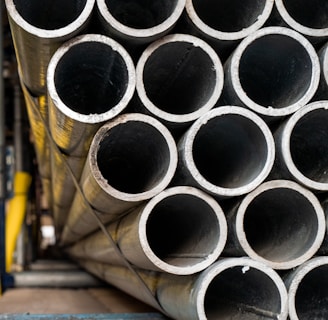
Illustrative photograph: the blowup / Unsplash.

Contact
We are always here to help
SOCIAL MEDIA
LINKS OF INTEREST
© 2026 ASCE Mexico. All rights reserved.